|
In 1622 Constance of Austria, Queen consort of Poland, sent a gift to sons of her younger sister Duchess of Tuscany. The sons of Maria Maddalena of Austria were presented with a set of colourful costumes - żupan dress, delia coat and other necessary utensils of a Polish noble, including pernach mace and zygmuntówka sabre, among others. Their new exotic attires were captured in a series of portraits by Justus Sustermans, at least one of which was sent to Warsaw in gratitude to Queen of Poland.
The portrait in the collection of Flint Institute of Arts (inventory no. 1965.15) depicting Maria Maddalena of Austria with her son Ferdinand in Polish costume is an exact copy of a painting preserved in the Uffizi in Florance (inventory no. 1890, 2246). It was by most accounts in the possession of the Polish Vasas and was transferred by John II Casimir Vasa to France after his abdication in 1668.
Portrait of Maria Maddalena of Austria, Duchess of Tuscany with her son Ferdinando in Polish costume by Justus Sustermans, 1622, Flint Institute of Arts.
Portrait of Leopoldo de' Medici in Polish costume with a pernach mace by Justus Sustermans, 1622, Uffizi Gallery.
Equestrian portrait of Ferdinando de' Medici in Polish costume with a sabre by Justus Sustermans, ca. 1622, Konopiště Castle.
Portrait of dwarf in Polish costume holding a pernach mace and a dog by Anonymous from Florence, 1620s, Uffizi Gallery. Its possible that the dwarf or his costume was a gift from Constance of Austria to her sister Duchess of Tuscany. Identification by Marcin Latka (Artinpl).
See more pictures of Polish noble costume on Pinterest - Artinpl and Artinplhub
In the beginning of the 17th century the medieval abode of the Dukes of Masovia was largely extended to house the parliament of the Polish-Lithuanian Commonwealth, offices and court of the Vasas. The Italian architects Giovanni Trevano, Giacomo Rodondo, Paolo de la Corte and Mateo Castello constructed a Mannerist-early Baroque five-sided palace between 1598-1619. In 1621-1627, with the threat of Ottoman invasion, the palace was fortified with a curtain wall from the Vistula according to Italian concept of palazzo in fortezza (meaning in Italian, "a palace in a fortress"). Between 1634 and 1637 a large hall was constructed in upper parts of the southern wing to house opera hall of King Ladislaus IV and in 1637 the staircase tower was largely remodelled (Ladislaus' Tower). In 1643 the Prince-Cardinal Charles Ferdinand Vasa's Palace was erected on the northern bastion of the Castle's curtain wall and in 1644 a new gate (Saint John's Gate) and the Sigismund Column were erected by royal architect Constantino Tencalla in Baroque style.
During the so-called Deluge of the Polish-Lithuanian Commonwealth (invasion of allied forces of Sweden from north, Brandenburg from west, Transilvania from south and Muscovy from East), the castle was devastated in three occupations by foreign forces between 1655-1656 (the last was Transilvanian occupation). All valuables, including marble pavements, chimneys and window sills were shipped to Sweden, while the interiors were turned into stables and a hospital. Exterior and interior
(1) Detail of the Plan of Warsaw in 1656 by Nicolas Pérelle after Erik Dahlbergh, printed in 1696. The fortifications of the Royal Castle in Warsaw were built in the years 1596-1627 giving the structure the more modern appearance according to principles of the Old Italian School (circle of Antonio da Sangallo). They consisted of a 162-metre-long curtain wall flanked by bastions on either side. Two shorter walls connected the bastions with the Castle. The wall rose at least 6.70 metres above the ground level. The fortifications were made of granite rocks, and due to the instability of the terrain, oak piles were also driven into the ground, the basic material for the surface construction was limestone surmounted with bricks. The remnants of the fortifications were absorbed by subsequent buildings in the 18th-century.
Map legend
(2) Sigismund III Vasa on catafalque by Christian Melich, 1633, Wawel Royal Castle.
(3-4) The Ladislaus Tower of the Castle, 1637. Tiles from the excavations in the Royal Castle's garden, 1630s: (5) Tile with eagles from a stove, (6) Stove tile with a lion or a griffon, (7) Dutch tile with a soldier. Portraits
(1-2) Portrait of Sigismund III Vasa and Constance of Austria by Philipp Holbein II or workshop, ca. 1625, Royal Castle in Warsaw.
(3) Portrait of Philip III of Spain by Andrés López Polanco, ca. 1617, Skokloster Castle, possibly from the collection of Sigismund III Vasa. In 1615 Queen Constance of Austria, Sigismund's second wife, ordered the Commonwealth's ambassador in Spain to ask for the portraits of the members of the Spanish Royal family. Her elder sister Margaret of Austria, was a wife of King Philip III of Spain. Since the new Holy Roman Emperor, Matthias, resided more frequently in Vienna then in Prague from 1612, the portraits of Spanish Habsburgs would be sent to Vienna after this date, consequently it is more probable that the Philip III's portrait was captured by Swedish forces in Warsaw and not in Prague. (4-5) Portraits of two sisters, daughters of Philip III of Spain and Margaret of Austria: Empress Maria Anna of Spain by Frans Luycx, ca. 1638 and Anne of Austria, Queen of France by Charles Beaubrun, ca. 1645. Both portraits were given to the Visitationist Monastery in Warsaw by John II Casimir Vasa in September 1668 and by most accounts adorned Castle walls. (6) Portrait of Eleonora Gonzaga (1630-1686) by Frans Luycx, ca. 1651, Nationalmuseum in Stockholm. A portrait of a relative to Queen Marie Louise Gonzaga and a wife of Emperor Ferdinand III, cousin of John II Casimir Vasa was sent to Warsaw and was captured by Swedes in 1655 (from the collection of Gripsholm Castle).
See more pictures of the Royal Castle in Warsaw during the Vasas on Pinterest - Artinpl and Artinplhub
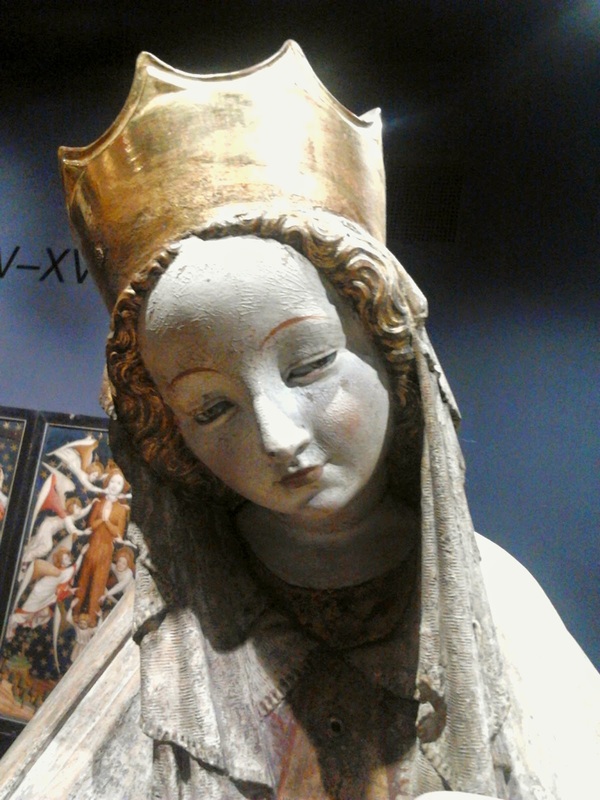
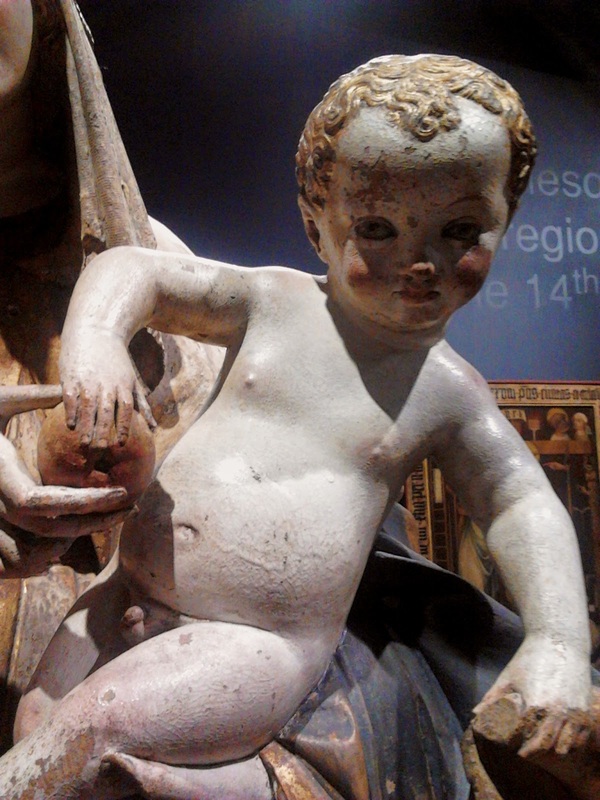
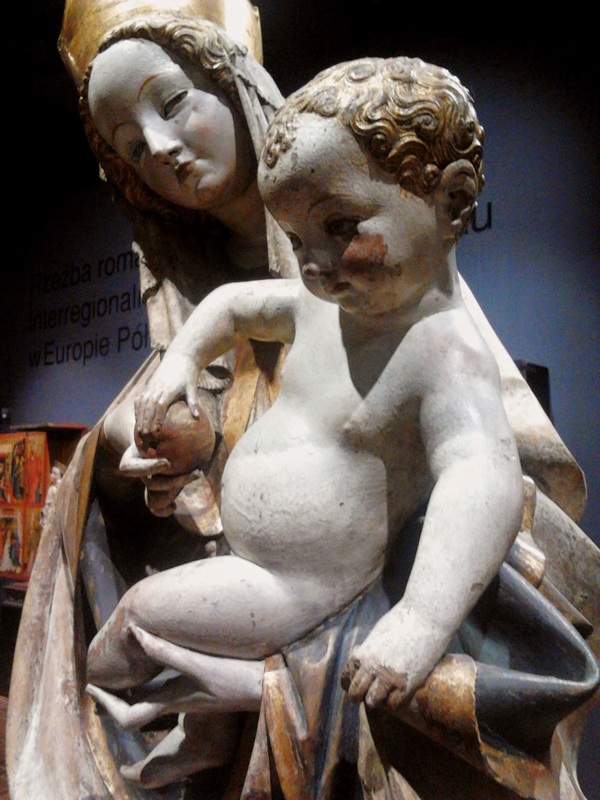
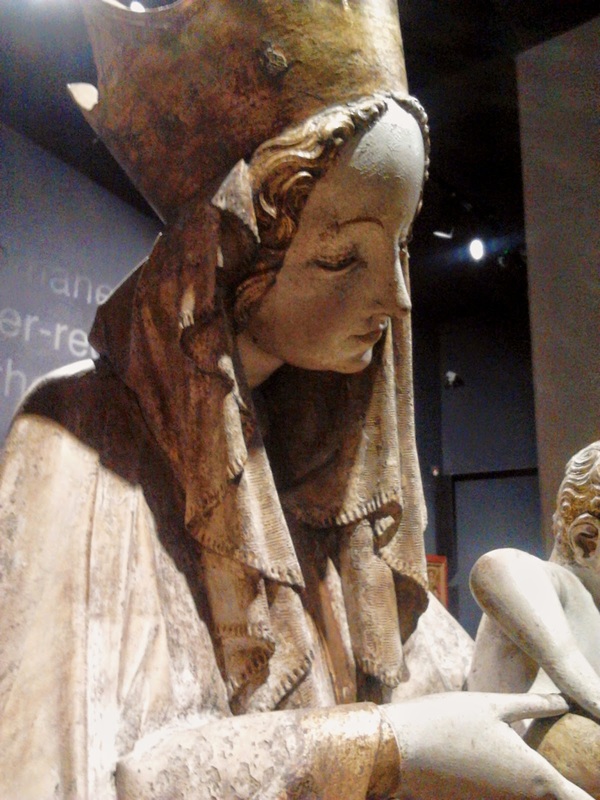
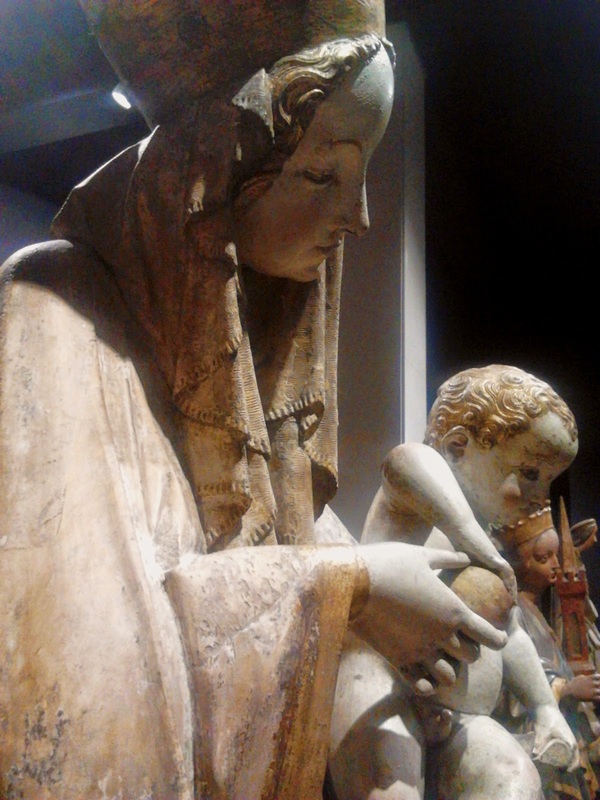
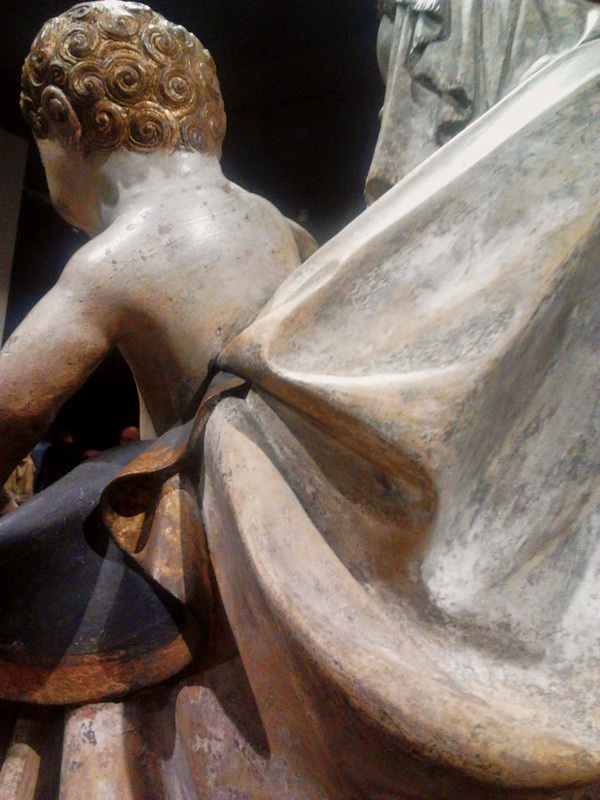
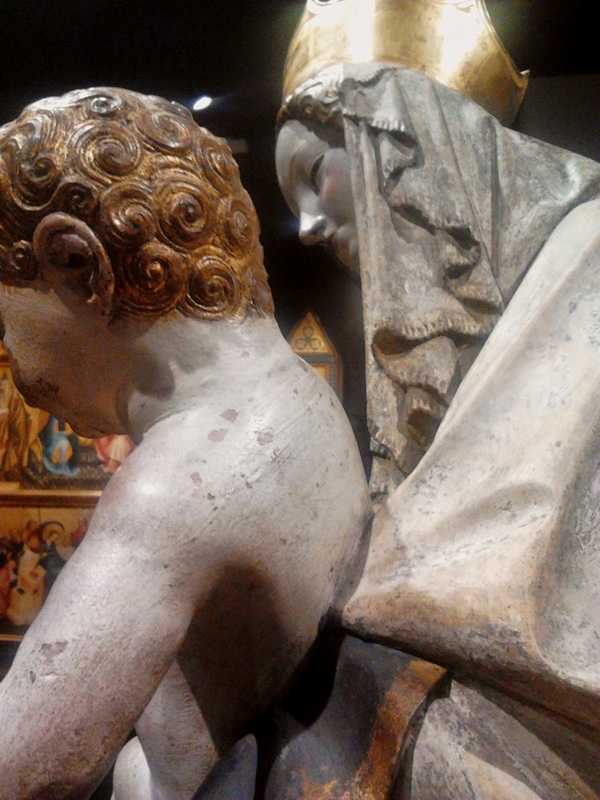
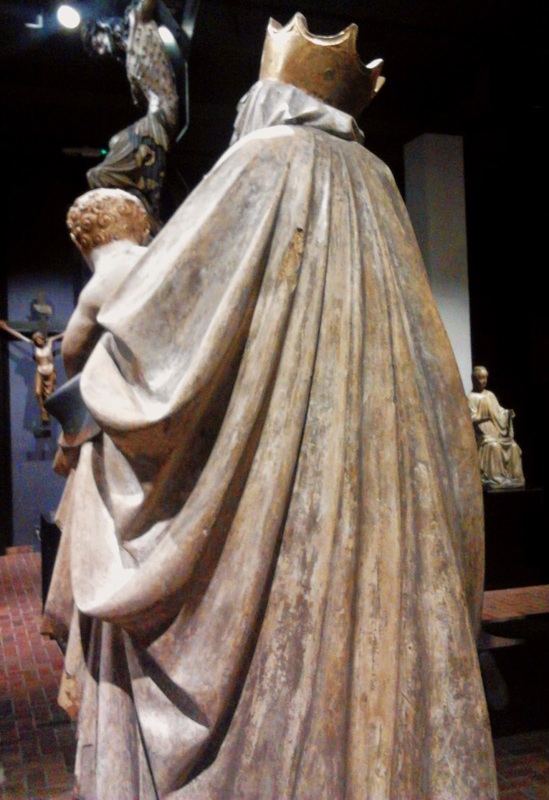
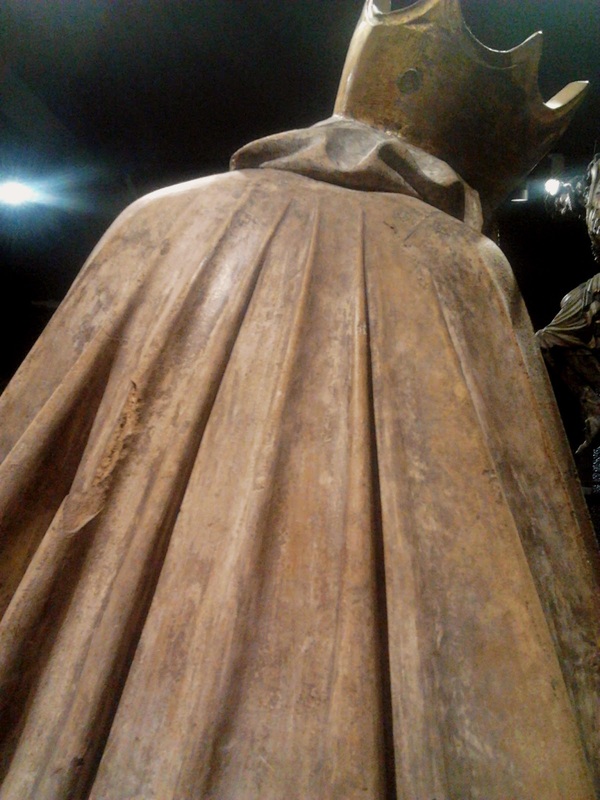
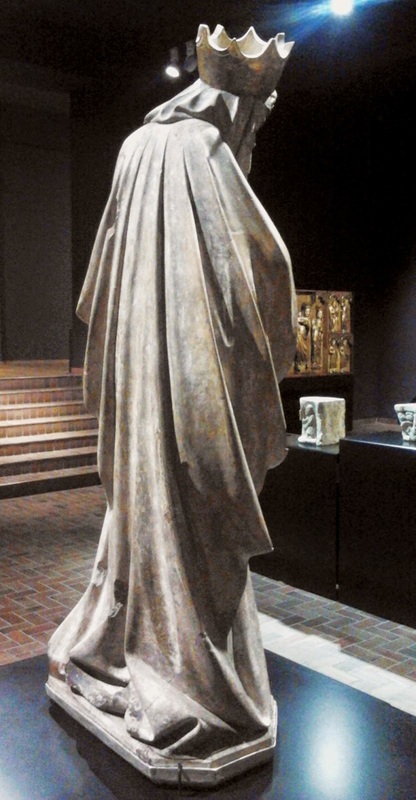
The sculpture ranks as one of the most significant examples of its type. It depicts the standing Virgin tenderly holding the infant Christ. The feminine beauty of Mary is allusion to her spiritual beauty, while the apple given to the Child is allusion to Mary as incarnation of the new Eve and Christ's sacrifice. With humble consent to the Incarnation she has redeem disobedience of Eve and Original Sin. Stylistic nature indicate Prague during the reign of King Wenceslas IV (1378-1419) as the most probale place of origin.
polychromy on gaize, c. 1390, 113 × 47.5 × 32 cm (44.5 × 18.7 × 12.6 in), inventory number Śr.8, on permanent display in the Gallery of Medieval Art, Muzeum Narodowe w Warszawie (MNW)
On the occasion of 150th anniversary of Olga Boznańska's birth on 15 April 2015, the National Museum in Krakow and the National Museum in Warsaw organized and exhibition devoted to her work and life.
Olga Boznańska is considered as one of the most distinguished painters of the Young Poland movement, active in Munich and Paris. She was born in 1865 in Kraków and died in 1940 in Paris. Her artistic formation was influenced by sophisticated art of James McNeill Whistler, and artists placed on the border between realism and impressionism, Edouard Manet and Wilhelm Leibl. During the Munich period she created large, full-length portraits inspired by Velázquez. The subject-based arrangement of the exhibition include portraiture, images of children, motherhood, urban landscapes, atelier interiors and still-life. It was supplemented with works by artist who influenced and inspired her. 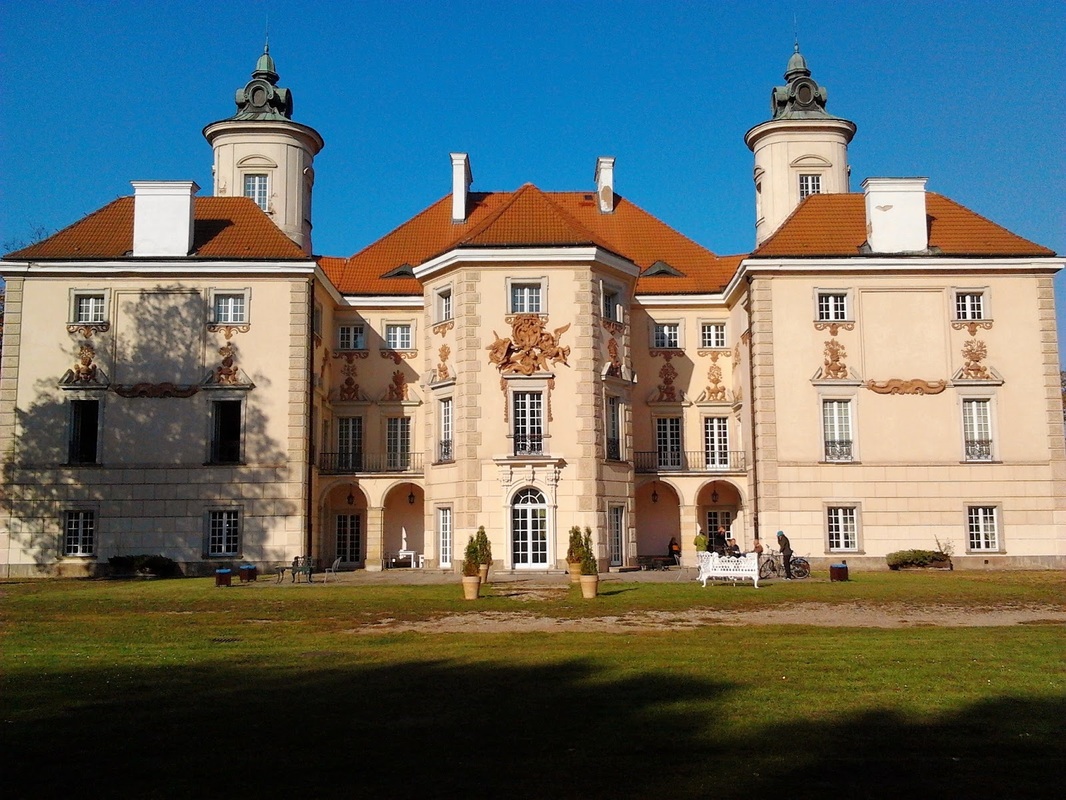
The Palace in Otwock Wielki was constructed as a summer residence for Bieliński family. The construction started after 1682 at the initiative of Kazimierz Ludwik Bieliński and it was accomplished in about 1689, possibly under supervision of Tylman Gamerski, Carlo Ceroni or Józef Fontana. The main tympanum was adorned with a scene of bacchanal with nymphs, satyrs and God Pan in the center.
The subsequent owner, Franciszek Bieliński, Grand Marshal of the Crown renovated the palace in 1757. The modernization in Rococo style was conducted by Jakub Fontana. At that time the interior was remodelled and adjusted for the purpose of a yearlong living - tile stoves were installed instead of fireplaces in some rooms, the outdoor staircase was demolished and a new one was constructed inside. Also new outbuildings were constructed to house guest rooms, kitchens and rooms for servants. Marianna Bielińska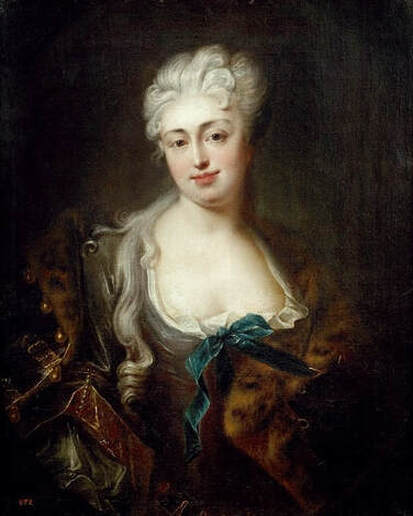
One of the most renowned of the palace's inhabitants was Marianna Bielińska (c. 1685-1730) - mistress of King Augustus II of Poland. Marianna was a daughter of Grand Marshal of the Crown Kazimierz Ludwik Bieliński, a leader of French party in Poland. His lavish estate in Otwock Wielki was frequented by many state figures including the King himself, who become a lover of his daughter. Soon afterwards Bieliński married his daughter to Bogusław Ernest Denhoff. Despite that Marianna remained King's mistress and eventually divorced Denhoff with Pope's approval. She had a large influence on the King and persuaded him to enter into an alliance with France in 1714. When the new alliance become less beneficial then expected she was dismissed by the King.
Her portrait painted by Ádám Mányoki, along with some other portraits of Royal Mistresses preserved in the Palace on the Water in Warsaw. The Hungarian painter educated in Germany developed his own style and largely influenced the portraiture in Poland. Room of Roman ruins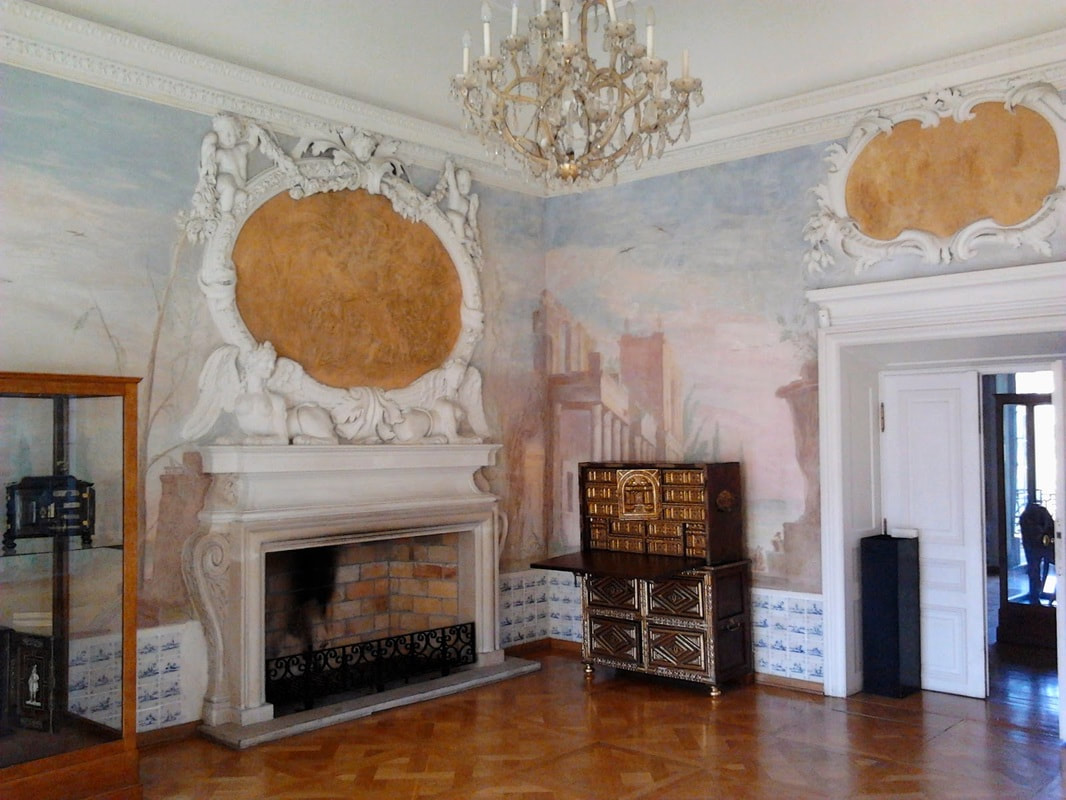
During the renovation in the second half of the 17th century the palace was adorned in late baroque style. With a certain level of probability the frescoes can be attributed to Tylman Gamerski or his circle, due to similarity to some other works. Although predominantly known as an architect, Gamerski was also a good painter, educated in his native Low Countries and in Venice. Approximately 30% of original decoration was restored after the war.
Initially the room served as a bedchamber for master of the house. The walls were covered with frescoes depicting ancient ruins (colonnades, fountains, gates, arcades, vases) and a wooden panneling to the one sixth of its hight, which was replaced with copies of Dutch tiles after the war. The style of decoration referring to the work of Claude Lorrain was completed with floral and mythological stuccoes in overdoor and above fireplace. Room of marine landscapes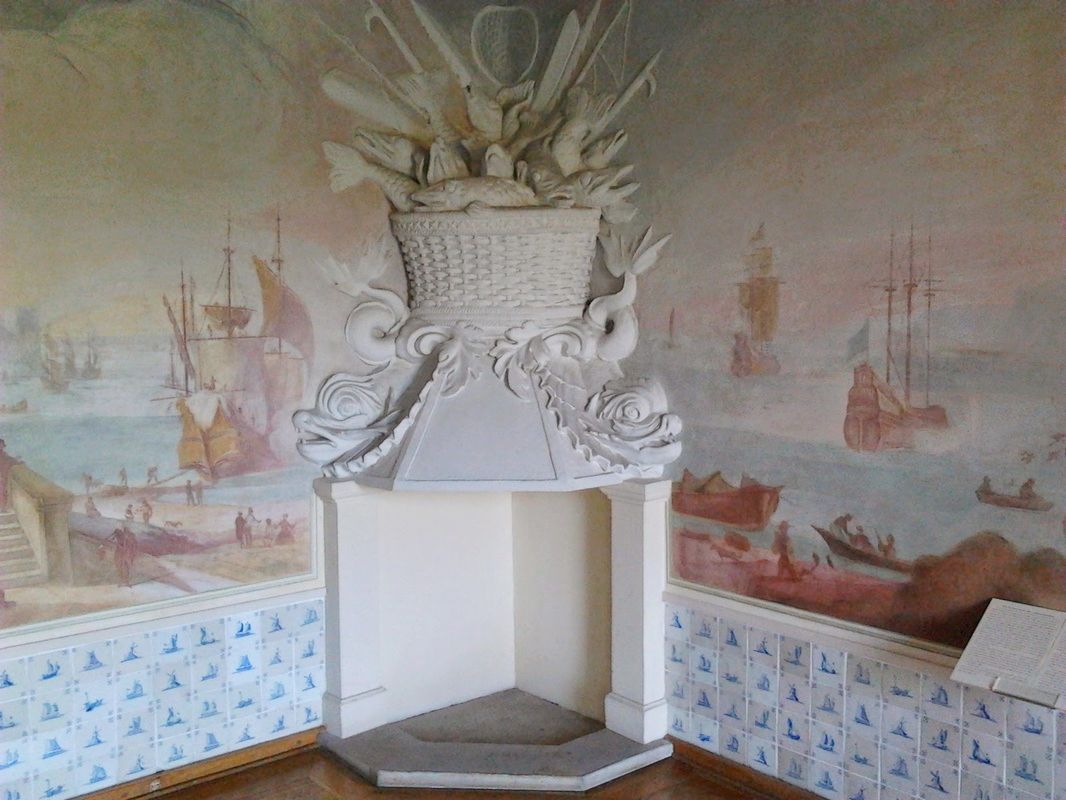
The room was originally an antechamber of Kazimierz Ludwik Bieliński. The preserved frescoes were created during second reconstruction of the palace in the second half of the 17th century and are attributed to Tylman Gamerski. Approximately 75% of the original decoration preserved.
Among elements depicted are two and three masthead boats moored in the port or entering the port, small boats filled with people, lighthouses and the rocky coast. The lower parts of the walls were covered with Dutch tiles. As in the other rooms the decoration included rich stuccos in the form of oval cartouches in overdoor, adorned with shells, acanthus twigs and grass blades. The cartouches were filled with images in sepia (only one of them preserved). Chimney with phoenix

The chimney with phoenix born from ashes, that once adorned the rooms of Ludwika Maria Bielińska, was moved to the staircase. The original decoration of wife's rooms did not preserved.
Vestibule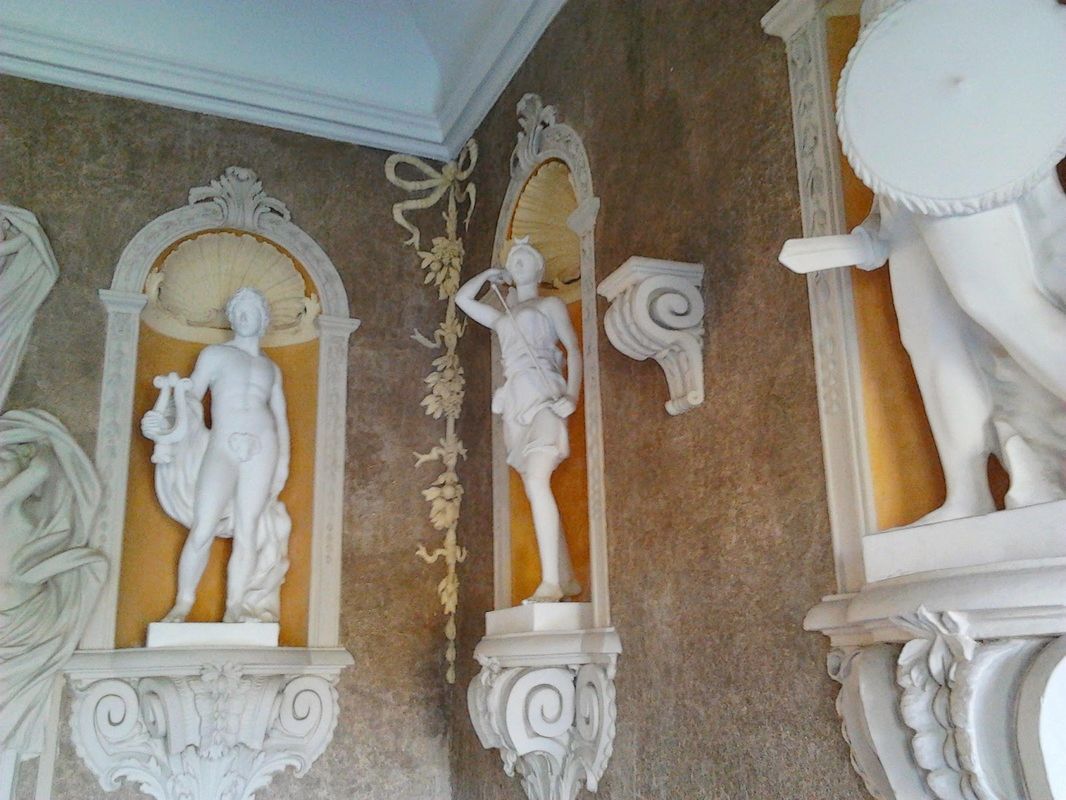
The vestibule of the Otwock Wielki Palace was initially a representative hall into which the double external staircase led directly from the courtyard. It is one of the 4 rooms of the palace with original decoration.
The semi circular niches supported by richly decorated corbels are the main features. The original Baroque sculptures that filled the niches were destroyed between 1809 and 1828. Present statues depicting mythological deities were executed in 1975 by Stanisław Kulon. The decoration of the vestibule was to resemble an antique grotto and a Palladian Corinthian hall. The walls were covered with a mixture of sand, lime, green glass and granite. The southern wall is filled with a wide semi circular entry into the ballroom framed with stucco decoration in the form a fabric supported by 4 putti and two herms in the form of a semi nude female and male. The herms indicated the initial division of the palace's structure into the wife and husband's space and bears strong resemblance to the owners Ludwika Maria Bielińska and her husband Kazimierz Ludwik. Between 1787 and 1790, Franciszek Bieliński, the palace's owner, has visited Italy several times. During his sojourn in Naples he acquired a collection of 85 teraccotta busts and copies of antique sculptures from the collection of Farnese family and originating from the Pompei and Herculanum excavations. As the collection was intended to be housed in Otwock Wielki, the palace underwent some structural changes inside. Ballroom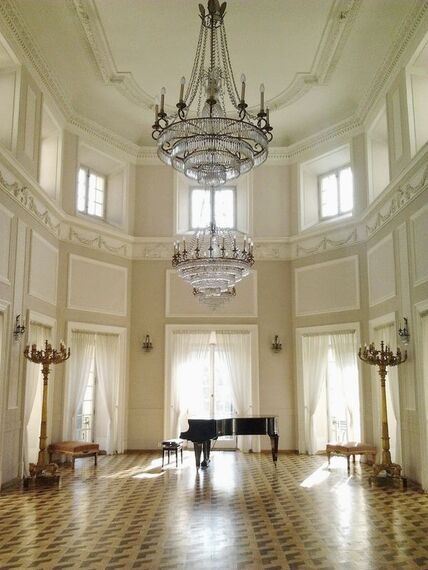
The ballroom with a balcony raise at the height of the two stories. The original baroque furnishings and decoration not preserved to our days. The room was adorned after the war with neoclassical stuccos and furnished with 19th century furniture including a pair of Russian candlesticks. External arcade terrases connect the room with husband's and wife's part of the palace.
|
Artinpl is individual, educational project to share knowledge about works of art nowadays and in the past in Poland.
If you like this project, please support it with any amount so it could develop. © Marcin Latka 

Categories
All
Archives
April 2023

|